Why Cannabis Terpenes Change Over Generations
“If the name stays the same, why does the smell change?”
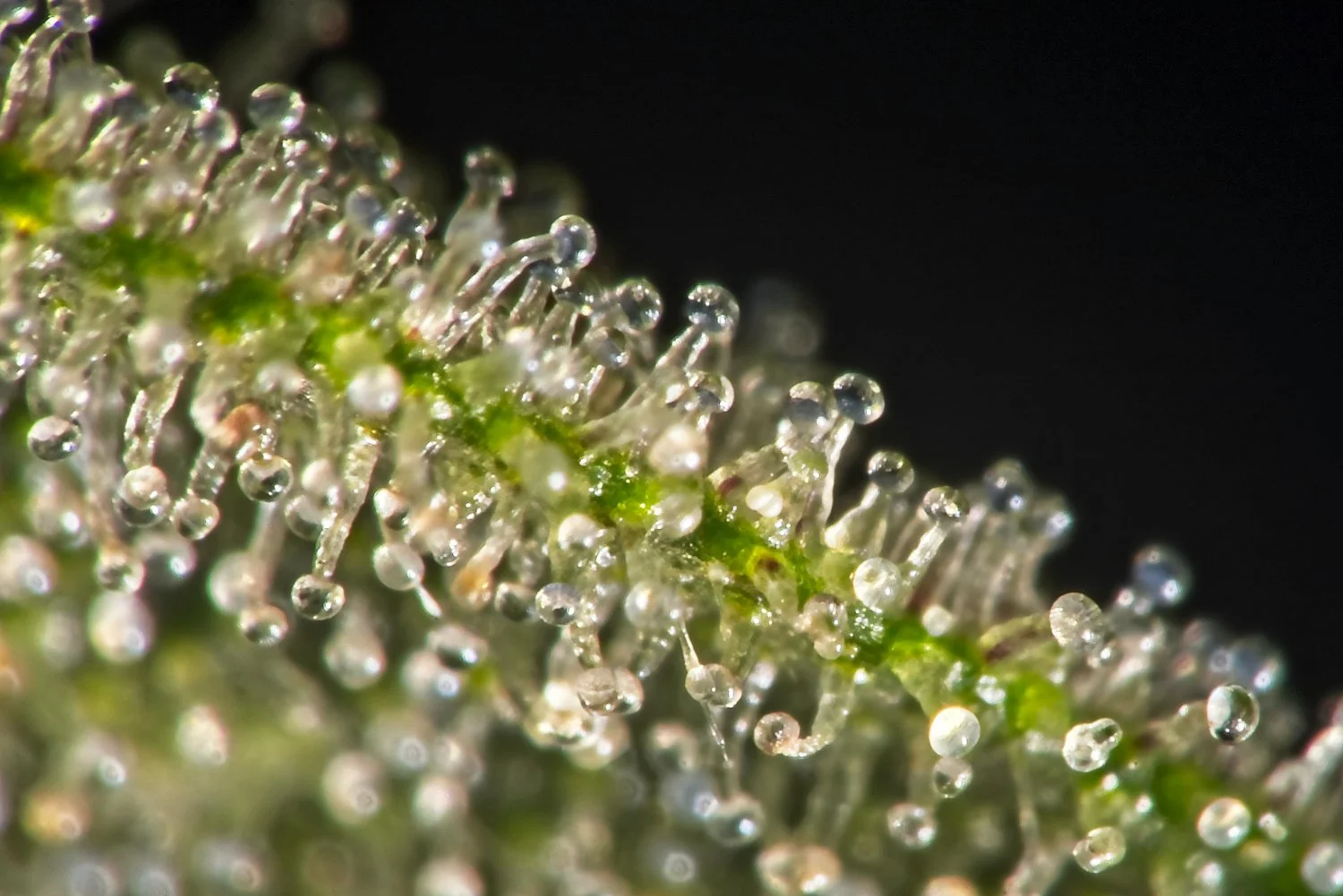
Cannabis trichomes where terpene compounds are produced.
A cultivar is not a fixed recipe. It is a living expression of environment, selection, and time.
Cannabis strains are often treated like fixed recipes.
Like once a cultivar gets a name and a reputation, people sort of start acting like that smell, that flavor, and that overall profile are now locked forever. But that’s not really how plants work. The reality is a lot more alive than that. Every generation is at least a little different from the one before it. Terpenes shift. Aromas evolve. Flavors drift.
And over enough time, even cultivars people think they know really well can start tasting and smelling different than they used to.
That doesn’t mean the plant somehow became less real or less legitimate. It means it’s alive, and living things respond.
And once you accept that, the real question becomes pretty simple: if the name stays the same, why does the smell change?
Plants Are Not Static Organisms
Plants do not grow in a vacuum. They are constantly reacting to what’s around them.
Temperature, humidity, light intensity, root-zone conditions, nutrition, and soil biology all play a role in shaping how a plant grows and what chemistry it ends up expressing. Cannabis is especially interesting in this way because its terpene profile is not just some fixed blueprint being copied over and over again. It is a living response to conditions.
That part matters, because people sometimes talk about terpene profiles like they’re permanent labels slapped onto a plant. They’re not. They’re expressions. And expressions can move.
A plant grown under cooler nights may not express itself the same way as one grown in steady heat. A cultivar raised in living soil may lean a little differently than that same cultivar grown in a more sterile or highly controlled medium. Even things like stress, airflow, watering habits, and harvest timing can push the final aroma in one direction or another.
Plants are not static organisms. They constantly respond to their environment, and cannabis expresses that response through changes in chemistry.
So when somebody says a strain doesn’t smell like it used to, that does not automatically mean something went wrong. Sometimes it just means the plant met a different environment and answered in a different way.
But environment is only the first layer. The next layer is human choice.
Breeding Pressure Reshapes Aroma Over Time
The second big reason terpene profiles change is selection. Human selection, specifically.
Breeders are always making choices, whether they realize the full downstream effect or not. One person selects for louder fruit. Another selects for structure. Another goes after color, yield, resin, or speed. And every time that choice gets made, it puts a little pressure on the future direction of that cultivar.
Every time a breeder selects a plant for its aroma or structure, they are subtly shaping the chemical future of that cultivar.
A sweeter plant may get chosen over a funkier one. A frostier plant may get kept while a more complex aromatic expression gets left behind. A tighter flower structure may be favored because it looks better on the shelf, even if the less marketable phenotype had a more interesting terpene profile.
Usually these are not massive changes all at once. That’s what makes this so easy to miss. The shift is often gradual. But breeding is cumulative, and small choices made over and over again eventually become real movement.
That’s really the point: nobody has to completely reinvent a cultivar for it to start changing. A bunch of small selections over time will do that just fine.
The future of a cultivar is usually not changed by one dramatic decision. It is changed by a long chain of quieter ones.
That is how a cultivar can slowly move toward being fruitier, flatter, louder, gassier, prettier, or in some cases less distinctive than it once was.
And once those choices start happening across different breeders and different rooms, selection becomes drift.
Genetic Drift Is Real
Then you have genetic drift, which is really just another way of saying that populations do not stay perfectly still over time.
Once a cultivar spreads into different hands, different things start happening to it. One breeder may preserve it carefully. Another may make selections based on what performs best in their room or climate. Another may prioritize what sells fastest. Another may be working from a narrower expression of the original population without even meaning to.
And once that happens across enough generations, the cultivar starts shifting. Maybe subtly at first, but still shifting.
Over multiple generations, the cumulative effect of these selections slowly reshapes a cultivar’s terpene fingerprint.
That is one reason older growers sometimes talk about certain strains almost like they remember a different version of them. A lot of the time, they probably do. Not because anyone is necessarily wrong or dishonest, but because biology moves and people move right along with it.
And honestly, that should not be surprising. A plant population passed through different breeders, different rooms, different climates, and different priorities is not going to stay chemically identical forever.
The name may stay the same while the expression underneath that name slowly changes.
And that is where this gets deeper than cultivation technique. Once chemistry starts carrying the record of environment and choice, terpenes stop feeling random. They start feeling like evidence.
Cannabis Carries History Inside Chemistry
This is where things start getting more interesting, at least to me. Because terpenes are not just flavor molecules or nice smells. They’re evidence.
They reflect adaptation, environment, ancestry, pressure, and selection. They tell you something about where a plant came from, what it has gone through, and how people have handled it over time.
When you begin looking at cultivars this way, cannabis stops feeling like a static product and starts feeling more like a living story that evolves over time.
And once you start seeing it like that, your whole perspective changes. You stop asking only whether a plant smells good and start asking why it smells the way it does. What shaped it? What got preserved? What got selected out? What conditions pulled one expression forward while another faded back?
That is where cannabis starts to feel deeper than branding, deeper than trend, and deeper than shelf appeal. You realize you are not just smelling a product. You are smelling adaptation, choice, and time.
A cultivar is not just a finished product. It is the current expression of a much longer chain of decisions, environments, and biological responses.
And once you see that, the last point lands harder: cannabis chemistry was never frozen in the first place. We just talk about it like it is.
The Chemistry Is Not Frozen in Time
The chemistry of cannabis is not frozen in time.
It is a living expression of environment, selection, and history.
That, to me, is part of what makes cannabis so fascinating in the first place. The aromas people experience are not just fixed ingredients sitting still in some permanent formula.
They are the result of an ongoing relationship between genetics, cultivation, and time. Even the most familiar cultivars are still, in a way, becoming themselves.
That’s why this stuff is worth paying attention to. Terpene profiles are not just there to be marketed or reduced to a few catchy words on packaging. They’re showing you movement. They’re showing you history.
And to me, that is the firmer truth underneath all of this: cannabis chemistry is not static and treating it like it is causes people to miss what is actually so remarkable about the plant. It is alive. It responds. It remembers, in its own way.
So, the next time a cultivar smells a little different than expected, it may be worth seeing that as information instead of disappointment. Because what you are smelling is not just a product. You are smelling the result of environment, inheritance, and human choice all meeting in one moment.
And that means terpene profiles are not just something to consume or describe. They are something to pay attention to, because they are telling you a story whether people realize it or not.
That, to me, is one of the clearest truths in cannabis: the plant is always responding, always recording, always becoming.
And that may be part of why it still has so much to teach people who are willing to pay attention.
