What Makes a Cannabis Cultivar Stable?
“Why true genetic stability takes multiple generations of careful selection.”
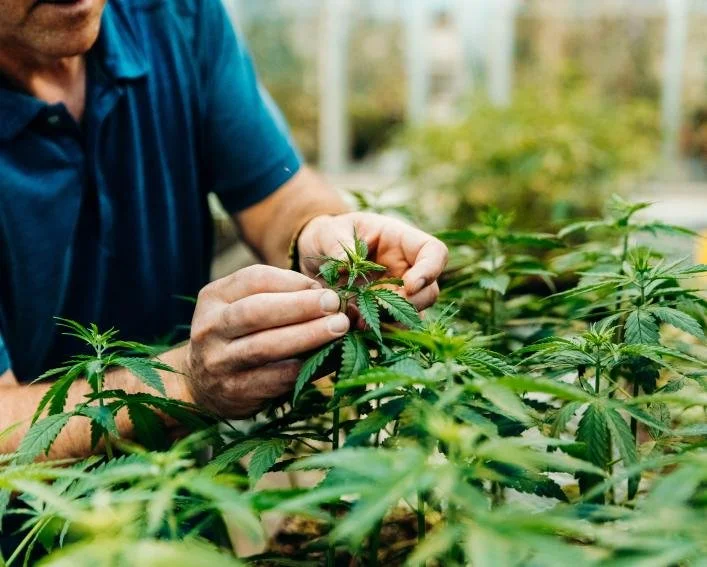
Cannabis demonstrating consistent expression after stabilization through breeding.
Cannabis growers talk about stable strains all the time.
You’ll see the word everywhere.
Seed catalogs.
Marketing pages.
Breeder descriptions.
But there’s a quiet problem hiding inside that word.
Most people using the word “stable” aren’t actually talking about the same thing.
Some people think stability means a plant always grows the same height.
Others think it means every seed produces the same flavor.
Some assume stability just means a breeder worked on the plant for a long time.
But stability in cannabis breeding isn’t really about time.
It’s about predictability.
And predictability only comes from understanding how plants express variation across generations.
The First Truth: Every Seed Is Different
Even when seeds come from the same parents, they are never identical.
Cannabis is a highly expressive plant. When two parents are crossed, the offspring can show a wide range of traits:
different aromas
different growth structures
different flowering speeds
different resin production
different terpene profiles
This range of expression is called phenotypic variation.
And it isn’t a flaw in the plant.
It’s the plant showing all the possibilities hidden inside its genetics.
Without variation, breeders wouldn’t have anything to select.
Variation is the raw material of breeding.
The Role of Selection
When breeders talk about “working a line,” what they’re really talking about is selection across generations.
It works something like this:
Generation 1 — make the cross
Generation 2 — observe variation
Generation 3 — select the best expressions
Generation 4+ — repeat the process
Each generation gives the breeder another chance to refine what the plant becomes.
Some plants are removed from the line.
Some are preserved.
Some become the parents of the next generation.
Over time, the gene pool begins to narrow.
Not randomly — but intentionally.
The breeder slowly filters the population toward a specific direction.
Toward a plant that consistently expresses the traits they believe define the cultivar.
What Stability Actually Means
A cultivar is considered stable when most seeds express a similar set of traits.
Not identical.
Similar.
A stable cultivar might consistently produce plants that:
finish within the same flowering window
grow within a similar height range
express similar terpene profiles
develop comparable bud structure
You may still see small differences between plants.
But the overall identity of the cultivar becomes recognizable and repeatable.
That’s the moment when a line begins to feel dependable.
Because stability allows a grower to plant ten seeds and have a reasonable expectation of what those plants will become.
Why Many Modern Cultivars Aren’t Fully Stable
The modern cannabis market moves quickly.
Breeders are often encouraged to release new genetics as soon as possible.
Sometimes after only a few generations of work.
That doesn’t mean those cultivars are bad.
Many of them are incredible.
But they can still carry wide phenotypic variation.
Which means growers may see several different expressions within the same pack of seeds.
Some people love this.
It creates opportunities to hunt for rare phenotypes.
Others prefer highly stabilized lines that behave more predictably.
Both approaches serve different purposes in the cultivation world.
Stability Is a Direction, Not a Finish Line
Even the most refined cultivars can still shift over time.
Environment plays a role.
Grower selection plays a role.
And genetics continue evolving as plants reproduce.
So stability isn’t really a permanent destination.
It’s more like a direction that a breeder carefully steers toward over many generations.
The goal isn’t to eliminate variation completely.
It’s to shape variation until a cultivar expresses its identity clearly and consistently.
The Real Meaning of Stability
When people talk about stable cannabis genetics, what they’re really describing is something simple:
Consistency of character.
A cultivar that reliably expresses its personality.
Its structure.
Its aroma.
Its effect.
Not perfectly.
But recognizably.
When that happens, a plant stops feeling random.
It begins to feel intentional.
And when a cultivar reaches that point, growers begin to recognize it not just as a plant—
but as a genetic story that finally knows how to tell itself.
